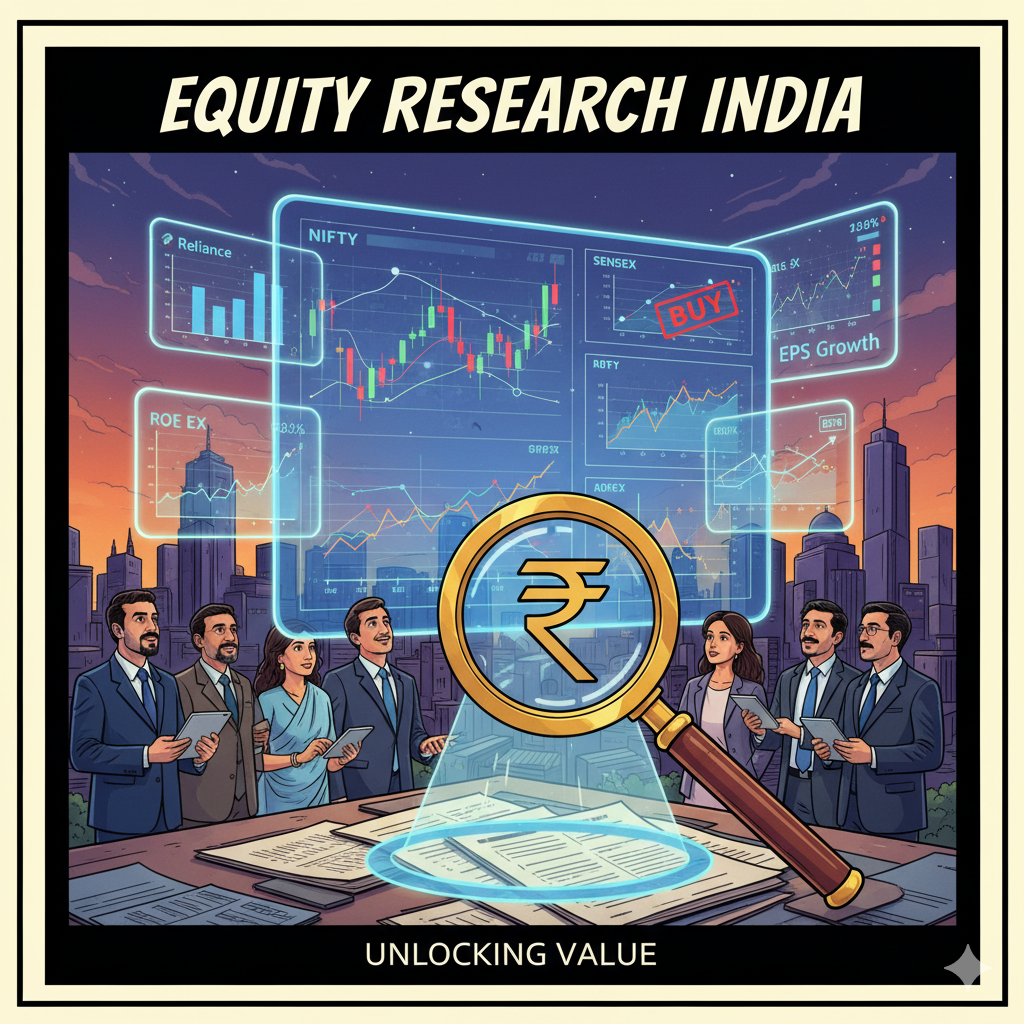


Beyond the Ticker Tape: What Really Happens in the Stock Market
The stock market isn't just a scoreboard of daily gains and losses; it’s a dynamic engine of economic activity. For students, seeing the market as a complex system—not a casino—is the first step toward smart investing.
It’s a place where:
• Companies raise funds to innovate, expand, and hire, directly fueling economic growth.
• Investors seek wealth creation by putting their capital to work in promising businesses.
• Economies reflect confidence or fear through the rising or falling indices like the Sensex or Nifty.
Think of it as the heartbeat of the economy — sometimes steady and strong, sometimes volatile and frantic.


The Investor's Emotional Rollercoaster
The single biggest determinant of stock market returns is often not the company's performance, but the collective mood of the market. This mood is driven by a predictable, repetitive Cycle of Investor Emotions.
This cycle repeats across history. The fear of missing out (FOMO) drives prices past their rational value, and panic selling causes sharp, unwarranted crashes. As an investor, your goal is simple: break the cycle.
Smart Ways to Invest: Your Investment Toolkit
You don’t need an MBA to start investing, but you do need a disciplined approach. True investment is a craft that requires analysis, not guesswork.
1. The Analytical Frameworks
• Fundamental Analysis: Study the company’s core value. Look at balance sheets, P/E ratios, and the quality of the management team.
• Technical Analysis: Study the market action. Use charts, moving averages, and volume trends to identify entry and exit points.
2. The Golden Rules
• Diversification: Never put all your eggs in one basket. Spread investments across different sectors, company sizes, and asset classes to cushion against any single failure.
• Long-Term Approach: Compounding is the 8th wonder of the world, but it works best with patience. Investing is a marathon, not a sprint.


Fintech & The Digital Revolution
In the last five years, technology has democratized investing for our generation.
Fintech Growth: Apps like Zerodha, Groww, and Upstox have brought the markets to students’ smartphones, making trading commission-free and instantaneous.
Digital Transactions: Stock investing is now as simple as a few taps—comparable to UPI payments.
However, this convenience brings new dangers:
Risks: Cyber frauds, fake "pump and dump" tips, and misinformation spread faster than ever on social media. Verify every piece of advice before you act.
Why It Matters & Lessons Learned
The stock market is the ultimate testing ground for discipline and patience. These are lessons that will serve you well, whether you pursue a career in finance, technology, or entrepreneurship.
Your Investor’s Mantra:
• Don’t chase quick profits. They are a distraction from long-term compounding.
• Learn from mistakes and track them. Treat every loss as an expensive lesson learned.
• Stay rational when others are emotional. Buy when others panic, and be cautious when others are greedy.
• Start small, start early, and think long term. Time is your most valuable asset.
In investing, the biggest risk is not market volatility — it’s investing without knowledge or patience.

Harsh Thakkar